


Skip directly to content

PDF

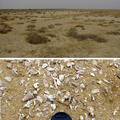
The Shell Middens of the Bay of Daun

Environmental Changes and Human Impact Along the Cost of Las Bela (Balochistan, Pakistan) Between the 8th and 5th Millenium BP

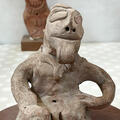
Traditional Potters of India

An examination of traditional pottery methods and practices in light of an exhibition at the Smithsonian Institution in Washington D.C. in 1987.

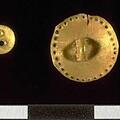
The stone and shell beads of the shell-midden settlement of RH-5 (Muscat, Sultanate of Oman)

A look at shell-midden and cemetery sites discovered in Oman that date back to the fifth millenium BCE, testifying to the levels of development in areas around the Indus Valley civilization thousands of years before it reached its peak.

The ‘High-West: Low-East’ Dichotomy of Indus Cities: A Dravidian Paradigm

A fascinating, well-documented article on Indus city layouts and linguistic paradigms. First published by the Indus Research Center at the Roja Muthiah Research Library in Chennai in December 2012.

The early Paleolithic sites of the Rohri Hills (Sind, Pakistan) and their environmental significance

One of the first articles to explore the significance of the Rohri flint mines near Mohenjo-daro, who use reaches back hundreds of thousands of years and which played an important role in the ancient Indus civilization as well.

Metal Technologies of the Indus Valley Tradition

This paper will summarize the available literature and recent discoveries on the production and use of metals by peoples ofthe Indus Valley,Tradition of Pakistan and Western India. The primary focus is on the Harappan Phase (2600-1900 B.C.), and includes a review of collections and technical arialyses of metal artifacts, along with tables of the published analyses from the sites of Mohenjo-daro, Harappa, Lothal, and Rangpur.

Changing Perspectives of the Indus Civilization: New Discoveries and Challenges

This article will focus on some o f the major new perspectives on the Indus Civilization that are the result of new discoveries at sites in both the core regions ofthe Indus Civilization that are found in Pakistan and India.

The Ancient City of Harappa

The vast mounded remains of the ancient city of Harappa, one of the largest sites of the Indus Valley civilization, have been known by scholars for more than one hundred years. Occupied almost continuously for more than five thousand years, Harappa's ancient ruins represent the traces of one of the earliest cities of the world, and even today one-third of the area is still occupied by the modern and thriving city of Harappa.

A peaceful realm? Trauma and social differentiation at Harappa

An analysis of a skeletal collection from Harappa contradicts the dehumanizing, unrealistic myth of the Indus Civilization as an exceptionally peaceful prehistoric urban civilization.

Carnelian Bead Production in Khambat, India: An Ethnoarchaeological Study

This article presents an overview of the important technological and organization aspects of the carnelian bead industry that will be useful in developing interpretive models regarding the role of agate bead production in early urban societies.

Pages